AIS, or Automatic Identification System, helps captains track and identify nearby vessels in real time. Learn how AIS integrates with Garmin electronics and SportLink® to improve navigation, safety and situational awareness on the water.

-
•AIS provides real time vessel information on screen including name speed heading closest point of approach and time to CPA to improve situational awareness
-
•It enhances safety offshore at night and in poor visibility by letting you see nearby traffic and track patterns rather than relying on radar alone
-
•On SportLink enabled Garmin systems AIS targets appear directly on charts and radar overlays enabling centralized navigation alongside charts radar sonar and engine data
AIS, or Automatic Identification System, is a marine tracking and vessel awareness system designed to improve safety and situational awareness on the water. It allows boats equipped with AIS to digitally transmit and receive information about nearby vessels, helping captains better understand traffic around them, especially in low visibility, offshore conditions or heavily traveled waterways.
At its core, AIS works by broadcasting information over VHF radio frequencies. Boats equipped with AIS continuously transmit data such as vessel name, speed, heading, location and direction of travel. Other AIS-equipped vessels and systems nearby can then receive and display that information directly on their chartplotter.
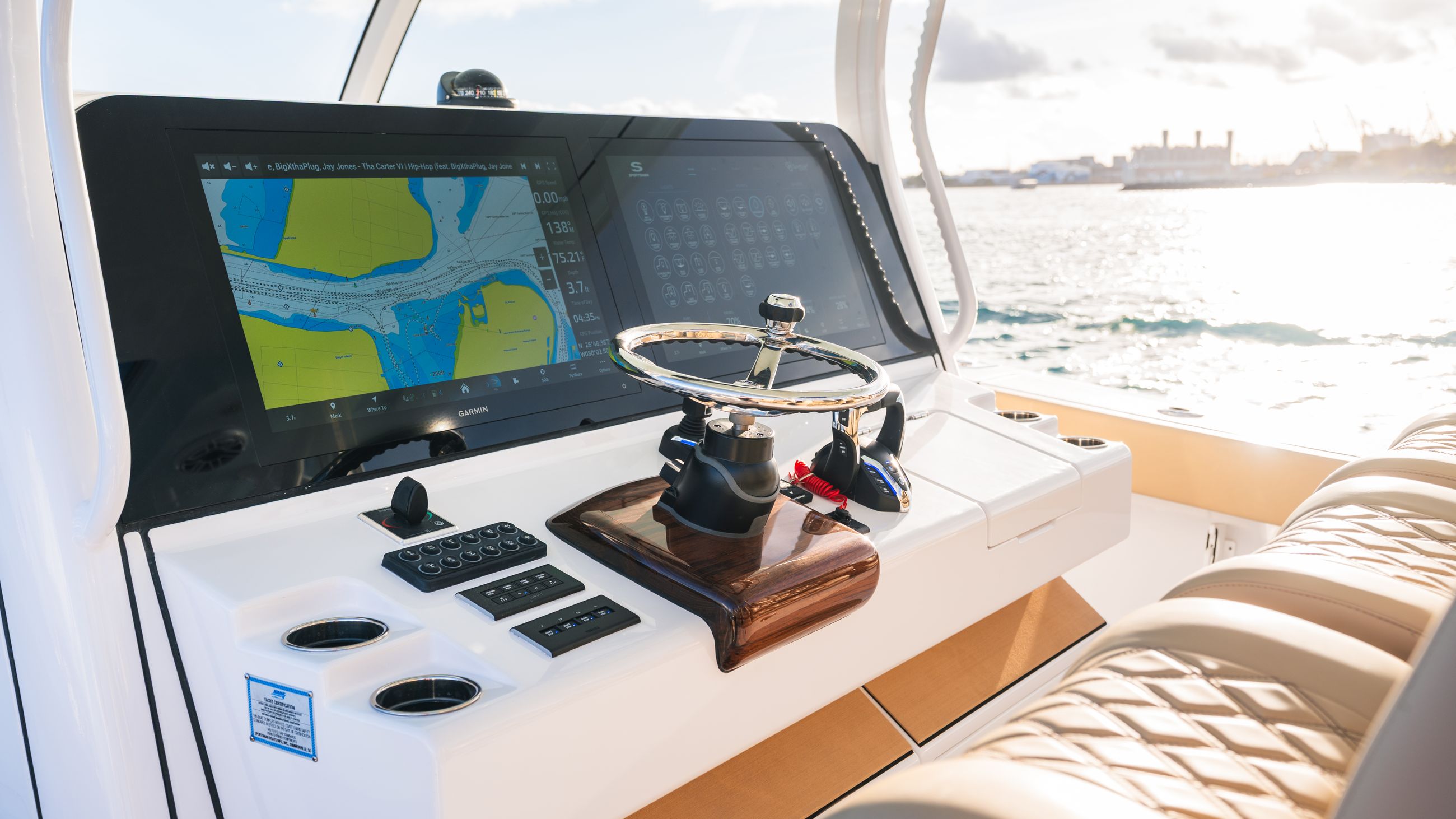
On modern Sportsman Boats, AIS functionality can integrate directly into Garmin multifunction displays (MFDs) through the SportLink® system. This allows captains to view nearby vessel traffic directly on their navigation screen alongside charts, radar, sonar and engine data, all within one centralized interface.
One of the biggest advantages of AIS is increased situational awareness. Instead of only visually identifying another vessel or relying strictly on radar returns, AIS provides actual vessel information directly on screen. This can help operators better understand which boats are nearby, where they are heading and whether they may cross paths.
AIS becomes especially valuable offshore, at night or in poor visibility conditions like fog or heavy rain. Large commercial vessels, cargo ships and many sportfishing boats utilize AIS systems, allowing smaller recreational boats to see and track them more clearly on the chartplotter.
For example, instead of seeing only a radar target approaching in the distance, AIS may display:
• Vessel name
• Speed
• Heading
• Closest point of approach
• Time to closest approach
This additional information helps captains make safer and more informed decisions while underway.
AIS can also improve safety around large commercial traffic. Bigger vessels often require significant distance to slow down or change course, and many have limited visibility directly around the ship. By tracking their movement through AIS, recreational boaters can better anticipate traffic patterns and avoid dangerous situations.
There are two main types of AIS systems:
• AIS receivers
• AIS transceivers
An AIS receiver only allows you to view nearby AIS traffic, while a transceiver both receives information and broadcasts your own vessel information to others.
Modern Garmin systems integrated through SportLink® can display AIS targets directly on navigation charts and radar overlays, creating a much clearer picture of what is happening around the boat. This is especially useful in crowded inlets, busy shipping channels and offshore tournament environments where multiple vessels may be operating close together.
AIS is not a replacement for radar, visual lookouts or proper seamanship, but it adds another layer of awareness that helps improve navigation and safety. When combined with radar, chartplotters and VHF communication, AIS helps create a more complete understanding of your surroundings on the water.
As marine electronics continue to evolve, AIS has become an increasingly valuable feature for both offshore anglers and recreational boaters. The ability to identify and track nearby vessels in real time gives captains more confidence, better awareness and additional peace of mind every time they leave the dock.
Related Posts
When the weather cools down it’s time to start getting your boat ready for winter storage. In this blog Alex is cover a few tips based on yo...
Read More