Open
Built for families who want serious offshore capability,
premium comfort and the freedom to fish, cruise or entertain.
Open 402
NEW Open 352
NEW Open 322
NEW Open 302
Open 282
Open 262
Open 252
Open 232
Open 212
Heritage
A refined crossover lineup designed for coastal cruising, ample seating,
family days and some fishing when the moment calls for it.
NEW Heritage 321
Heritage 261
NEW Heritage 251
Heritage 231
Masters
Shallow-water performance, fishing-focused layouts and
everyday comfort built for family life and fishing.
Perfect blend of offshore capabilities with inshore conveniences.
NEW Masters 288
Shallow-draft bay boats built around casting space, livewells and skinny-water fishing.
Masters 267
Masters 267OE
Masters 247
Masters 247OE
Masters 227
Discover the key differences between inboard and outboard motors, from performance to maintenance, to find the ideal choice for your boating lifestyle. Learn why Sportsman Boats exclusively uses Yamaha and Mercury outboard motors across their models.

-
•Inboard motors provide more power and a smoother ride in larger boats but take up interior space and can be harder to service
-
•Outboard motors offer easier maintenance and better fuel efficiency while freeing up interior space and providing agile handling for smaller boats
-
•Choosing between them comes down to your boating lifestyle; Sportsman Boats favors outboards with Yamaha and Mercury to blend performance, versatility and maintenance convenience
Choosing the right motor is crucial for achieving the best performance, fuel efficiency, and experience on the water. In boating, the two primary types of motors are inboard and outboard. Each comes with its advantages and specific uses, making it essential for boaters to understand the differences before making a decision.
Understanding the Basics: Inboard and Outboard Motors
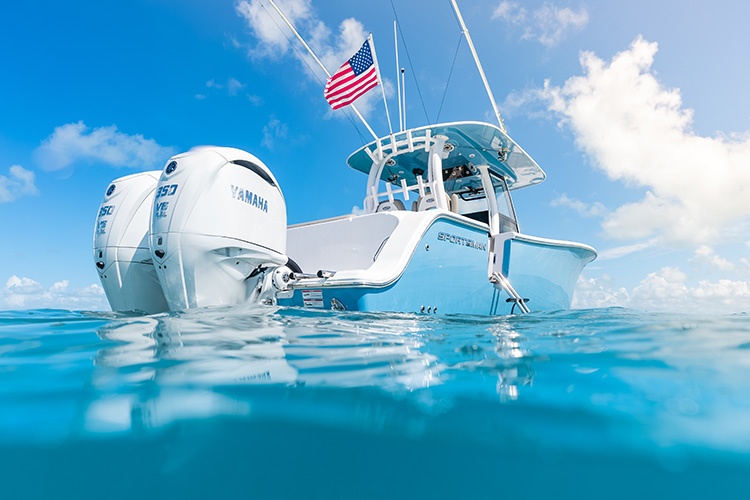
Inboard Motors
Inboard motors are housed within the hull of the boat, usually near the center. These engines are typically more powerful and are often found in larger vessels or boats designed for extended trips, water sports, or heavy-duty marine applications. They work through a drive shaft that extends to a propeller located underneath the boat.
Outboard Motors
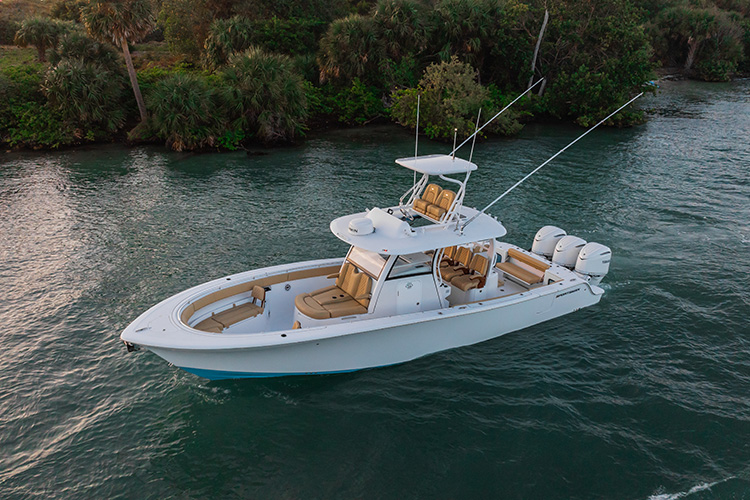
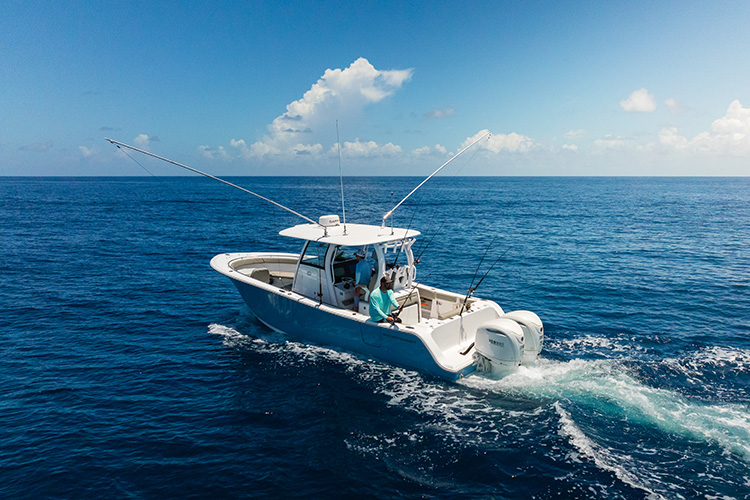
Outboard motors, on the other hand, are installed on the transom at the back of the boat. These engines are more compact, highly maneuverable, and easily accessible for maintenance. Because they’re mounted externally, outboard motors are widely used in smaller boats, fishing boats, and recreational center consoles.
Key Differences Between Inboard and Outboard Motors
1. Performance and Speed
Inboard Motors: Typically, inboard engines provide more power, resulting in higher top speeds and better performance in larger vessels. They offer a smooth, stable ride, making them ideal for activities that require a lot of horsepower, such as wakeboarding or long-haul cruising.
Outboard Motors: Outboards are known for their quick acceleration and responsive handling, especially in smaller boats. Their lightweight design offers nimble maneuverability, perfect for fishing in shallow waters, maneuvering through tight spaces, or making quick turns.
2. Space and Layout
Inboard Motors: Since inboard motors are housed inside the boat, they free up the transom and stern for other uses. However, they do take up interior space, which could impact storage or seating arrangements.
Outboard Motors: Because outboards are mounted outside the hull, they don’t interfere with onboard space, allowing for more open and flexible interior designs. This layout is especially advantageous in smaller boats where every inch of space counts.
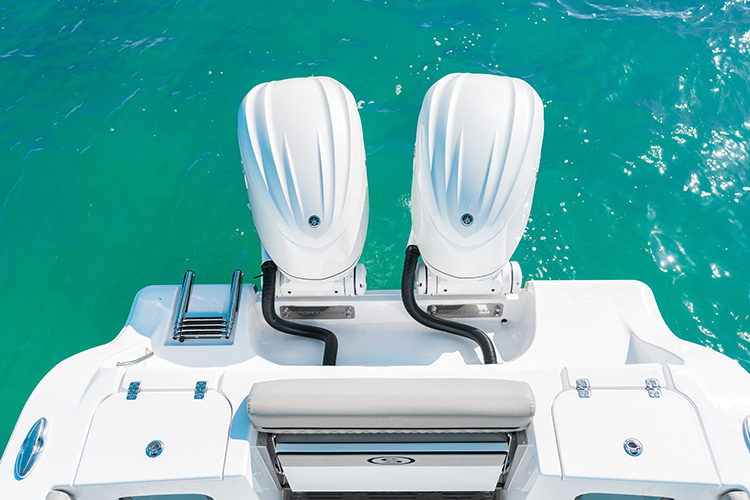
3. Maintenance and Access
Inboard Motors: Maintaining inboard engines can be a bit more challenging since they’re enclosed within the hull. Accessing them for routine maintenance or repairs may require specialized tools or taking the boat to a service center.
Outboard Motors: Outboards are much easier to access and maintain since they’re mounted externally. For most boaters, routine maintenance, such as oil changes or impeller checks, can be handled without taking the boat out of the water.
4. Fuel Efficiency
Inboard Motors: Due to their larger size and higher horsepower, inboards often consume more fuel, especially at higher speeds. However, diesel inboard engines, which are common in larger boats, are known for their efficiency and longevity.
Outboard Motors: With advancements in technology, modern outboard engines have become impressively fuel-efficient. They also tend to be more environmentally friendly, with lower emissions than some older inboard models.
5. Usage and Versatility
Inboard Motors: Boats with inboard engines are often built for specific purposes, such as cruising or watersports, making them ideal for boaters with specialized needs. Their stability and ability to power larger boats make them the go-to for long-distance travels or when carrying heavy loads.
Outboard Motors: Outboards offer unmatched versatility and are widely used across various types of boats. They’re easy to tilt up, allowing for beaching, shallow-water fishing, and trailering without fear of damage. Their versatility and ease of use make them popular among recreational boaters.
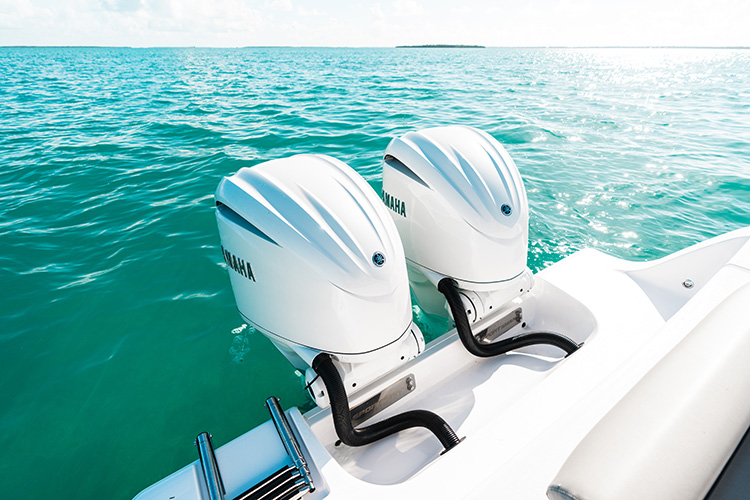
Sportsman Boats and Outboard Motors
Sportsman Boats exclusively utilizes outboard motors across all their models, favoring top-tier Yamaha and Mercury engines. The choice to partner with these reliable brands reflects Sportsman’s commitment to performance, versatility, and ease of maintenance, all traits that define their center console boats. Yamaha and Mercury’s reputation for fuel efficiency, power, and adaptability aligns with Sportsman’s mission to offer a premier experience for both avid anglers and recreational boaters.
Which Motor Is Right for You?
Ultimately, the choice between an inboard and outboard motor depends on your boating lifestyle, usage needs, and personal preference. If you’re looking for speed, power, and a smooth ride, especially on larger boats, an inboard motor may be the right fit. However, if ease of maintenance, fuel efficiency, and versatile use are more important, an outboard motor might be the way to go.
Choosing between these two motor types is about balancing what you want to get out of your time on the water with practical considerations of maintenance, fuel consumption, and handling. Whether you opt for the power of an inboard or the flexibility of an outboard, understanding these differences can make your decision easier and your boating experience even better.